A traumatic brain injury can change how a person moves through the world. Even simple tasks like standing up, turning, walking to the bathroom, or stepping over a curb can suddenly feel uncertain. One of the most common and concerning risks during recovery is falling. For people in post-acute brain injury care, falls can interrupt progress, cause new injuries, and shake confidence at a time when stability matters most.
That is why balance and safety are central to effective rehabilitation. At NeuLife Rehabilitation of Kentucky in Bowling Green, our team approaches fall prevention as part of the larger goal of helping each person regain function, confidence, and meaningful independence. Through Rehabilitation for Brain Injury, patients may work on strength, coordination, attention, body awareness, and everyday safety skills in both inpatient and outpatient settings.
This article explains why falls are so common after traumatic brain injury, which clinical factors increase risk, and which fall prevention techniques often play an important role in TBI rehabilitation programs in Kentucky. It is designed to help patients, families, and referral partners better understand what thoughtful, personalized brain injury rehabilitation in Bowling Green, KY can look like during this stage of recovery.
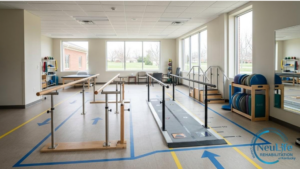
Visual concept: A calm, well-lit rehabilitation therapy gym with parallel bars, balance pads, floor markers, supportive handrails, and open walking space arranged for neurorehabilitation, with no identifiable people present.
Alt text: Therapy gym designed for balance and safety work in Balance and Safety: Fall Prevention Techniques in TBI Rehabilitation at a Bowling Green, Kentucky brain injury rehab setting.
Traumatic brain injury, often called TBI, can affect far more than muscle strength. It may change balance, vision, reaction time, attention, judgment, sensation, and the ability to process what is happening in the environment. A person might physically be able to stand, but still struggle to shift weight safely, judge distance accurately, or notice a tripping hazard quickly enough to respond.
Falls after brain injury also happen for reasons that are not obvious at first glance. Dizziness can make movement feel unsteady. Weakness on one side of the body can alter walking patterns. Visual changes may make stairs, thresholds, and uneven surfaces harder to read. Fatigue can reduce coordination later in the day. Some people experience impulsivity, which means they may try to move before they are fully prepared or before assistance is in place.
In a specialized inpatient brain injury program in Bowling Green, clinicians look at the whole picture rather than one symptom in isolation. They ask how physical, cognitive, and emotional factors interact during real daily activities. That broader view matters because meaningful fall prevention is not just about telling someone to be careful. It involves identifying why balance is impaired, which situations increase risk, and how targeted therapy can improve safety over time.
Effective fall prevention starts with careful assessment. In post-acute TBI rehabilitation programs in Kentucky, a multidisciplinary team may evaluate how a patient sits, stands, transfers, walks, turns, and manages changes in surface height. Therapists also watch for dizziness, delayed righting reactions, poor endurance, and reduced awareness of body position, which is called proprioception.
Cognitive and communication factors matter too. A person may understand a safety instruction in a quiet therapy room but struggle to follow the same instruction in a busy hallway or while multitasking. Speech-language pathology, occupational therapy, physical therapy, and nursing all help identify barriers that could raise fall risk in everyday routines.
This kind of structured review helps the clinical team build an individualized plan instead of relying on generic precautions. That personalized approach is a core strength of outpatient and residential brain injury rehabilitation programs in Kentucky, with a focus on real-life outcomes.
Balance retraining in brain injury rehabilitation is specific and progressive. Physical therapists often work on postural control, which means the ability to keep the body steady while standing still or moving. Treatment may include weight shifting, stepping practice, gait training, sit to stand repetition, and exercises that challenge coordination in a safe, supervised setting.
Occupational therapists also play a major role. They connect balance skills to functional activities such as dressing, bathing, kitchen tasks, and reaching for items without losing stability. Instead of practicing movement in isolation, therapy links balance to the routines that matter most for independence.
Depending on the person’s needs, clinicians may also address:
These interventions are adjusted carefully. In a high-quality residential brain injury program in South Central Kentucky, patients should be challenged enough to make progress, but not pushed beyond safe limits. That balance between safety and therapeutic progress is where experienced neurorehabilitation teams make a meaningful difference.
Even strong therapy gains can be undermined by an unsafe environment. After TBI, the brain may need more time to notice obstacles, adjust posture, and plan movement. That means cluttered floors, poor lighting, loose rugs, low seating, and crowded spaces can raise risk quickly.
Rehabilitation teams often train patients in realistic settings so they can practice safety strategies where daily life happens. This may include learning how to approach the bathroom safely, move in and out of bed with better control, manage uneven outdoor surfaces, or navigate community spaces with less distraction and better pacing.
Helpful environmental fall prevention measures often include:
At NeuLife Rehabilitation of Kentucky, the goal is not only to improve performance inside therapy sessions. The goal is to help each person carry safer movement patterns into real daily routines, community reintegration, and the next phase of recovery in Bowling Green and surrounding areas.
Fear of falling can become its own barrier. After a brain injury, some people move too quickly and underestimate risk, while others become so hesitant that they avoid activity and lose strength. Both patterns can interfere with progress. Good rehabilitation helps patients find a steadier middle ground where movement becomes more deliberate, efficient, and confident.
Clinicians support this process by breaking tasks into manageable steps, repeating safe movement patterns, and teaching strategies that improve self-awareness. Patients may learn how to pause before standing, scan the environment before walking, and recognize early signs of fatigue or dizziness. These are practical habits that can reduce falls while preserving independence.
Confidence grows best when it is tied to actual skill development. That is one reason specialized Rehabilitation for Brain Injury is so valuable after complex neurological injury. Progress is not measured only by distance walked or time spent standing. It is also measured by whether a person can move more safely through meals, grooming, therapy transitions, outings, and other parts of ordinary life.
Fall prevention needs can vary greatly depending on recovery stage and medical complexity. Some people benefit from a structured inpatient setting where therapists and nursing staff can address mobility, cognition, daily living tasks, and safety throughout the day. This level of support can be especially helpful when fall risk remains high, assistance is needed for multiple activities, or symptoms change from hour to hour.
Others may be appropriate for outpatient care once they can live more safely outside a residential setting but still need intensive therapy to improve balance, walking, coordination, and community function. Outpatient brain injury rehabilitation can also support the transition from supervised recovery to greater independence by continuing work on real-world safety goals.
For patients and referral partners looking for brain injury rehabilitation services in Bowling Green, Kentucky, it helps to choose a provider that understands both pathways. NeuLife Rehabilitation of Kentucky offers inpatient and outpatient brain injury rehabilitation with an individualized, function-focused approach. That continuity can support safer progression as needs evolve, while keeping the focus on practical gains in independence, participation, and quality of life.
For personalized guidance about program fit, patients, families, and referral sources can contact NeuLife Rehabilitation of Kentucky at (270) 467-6733 to discuss next steps and assessment options in Bowling Green.
Balance recovery after traumatic brain injury is rarely simple, but meaningful progress is possible with the right clinical guidance, the right environment, and a plan built around the whole person. Fall prevention is not a separate task from rehabilitation. It is woven into how patients relearn movement, rebuild confidence, and move toward greater independence in everyday life.
NeuLife Rehabilitation of Kentucky serves Bowling Green, and surrounding areas with specialized brain injury rehabilitation designed around real-world function and individualized care. If you have questions about inpatient or outpatient services, or if you need a more personalized assessment of safety and balance needs after brain injury, call (270) 467-6733 to speak with the admissions team and start the conversation.
This article is for informational purposes only and does not constitute medical advice. Always consult a qualified healthcare provider regarding diagnosis or treatment.
Q: Why does a traumatic brain injury increase fall risk?
A: A traumatic brain injury can affect balance, coordination, vision, body awareness, attention, judgment, and reaction time. Any combination of these changes can make standing, walking, turning, and managing everyday environments less safe.
Q: What therapies help reduce falls after TBI?
A: Physical therapy, occupational therapy, speech language support for cognitive communication needs, and targeted balance or vestibular work may all help. The right plan depends on the person’s symptoms, functional goals, and current level of safety.
Q: Is fall prevention only about using mobility equipment?
A: No. Equipment can be helpful for some patients, but fall prevention also involves task practice, strength building, attention training, environmental modification, and safer movement habits during daily activities.
Q: Can outpatient rehabilitation still help if someone is already walking?
A: Yes. A person may be walking but still have problems with turning, divided attention, fatigue, uneven surfaces, stairs, or community mobility. Outpatient therapy can target those higher level balance and safety challenges.
Q: How do I know if specialized brain injury rehab is needed?
A: If balance problems are linked to cognitive changes, dizziness, poor safety awareness, or difficulty managing daily tasks after brain injury, a specialized post-acute program may offer more focused support than general rehabilitation alone. NeuLife Rehabilitation of Kentucky can help assess whether inpatient or outpatient services are appropriate.
NeuLife's physical therapists work with people after brain injury, spinal cord injury and stroke. Families from across Louisiana can learn more about our neuro physical therapy program or see the areas we serve.


We know that choosing the next step in your recovery from a Brain Injury or Spinal Cord Injury is complex. Together, we can help you take the next step.
Contact us with any questions today.