Home / Areas We Serve / Baton Rouge / Occupational Therapy
Occupational therapy for people rebuilding self-care, household skills and everyday confidence after a brain injury, spinal cord injury or stroke. Residential and outpatient OT in Hammond for families across the capital region.
Occupational therapy rehabilitation near Baton Rouge helps a person get back to the tasks that fill an ordinary day, from buttoning a shirt to paying a bill, after a neurological injury changed how they move, see or think. An occupational therapist breaks each task into steps, retrains the skills behind it and adds tools or new methods where a skill has not fully returned.
NeuLife Rehabilitation of Louisiana delivers this therapy at a single location, our Hammond facility on Adams Rd. Capital region patients come east for a residential stay or for outpatient sessions. Occupational therapy works as part of our neurorehabilitation program for Baton Rouge families.
Getting here from Baton Rouge: NeuLife is about 45 minutes east on I-12, depending on traffic. Get directions from Baton Rouge.
Our statewide program pages cover brain injury rehabilitation, spinal cord injury rehabilitation, stroke rehabilitation, residential rehabilitation, neurorehabilitation, physical therapy and occupational therapy. Families from other parts of the state can find their region on our Areas We Serve page.
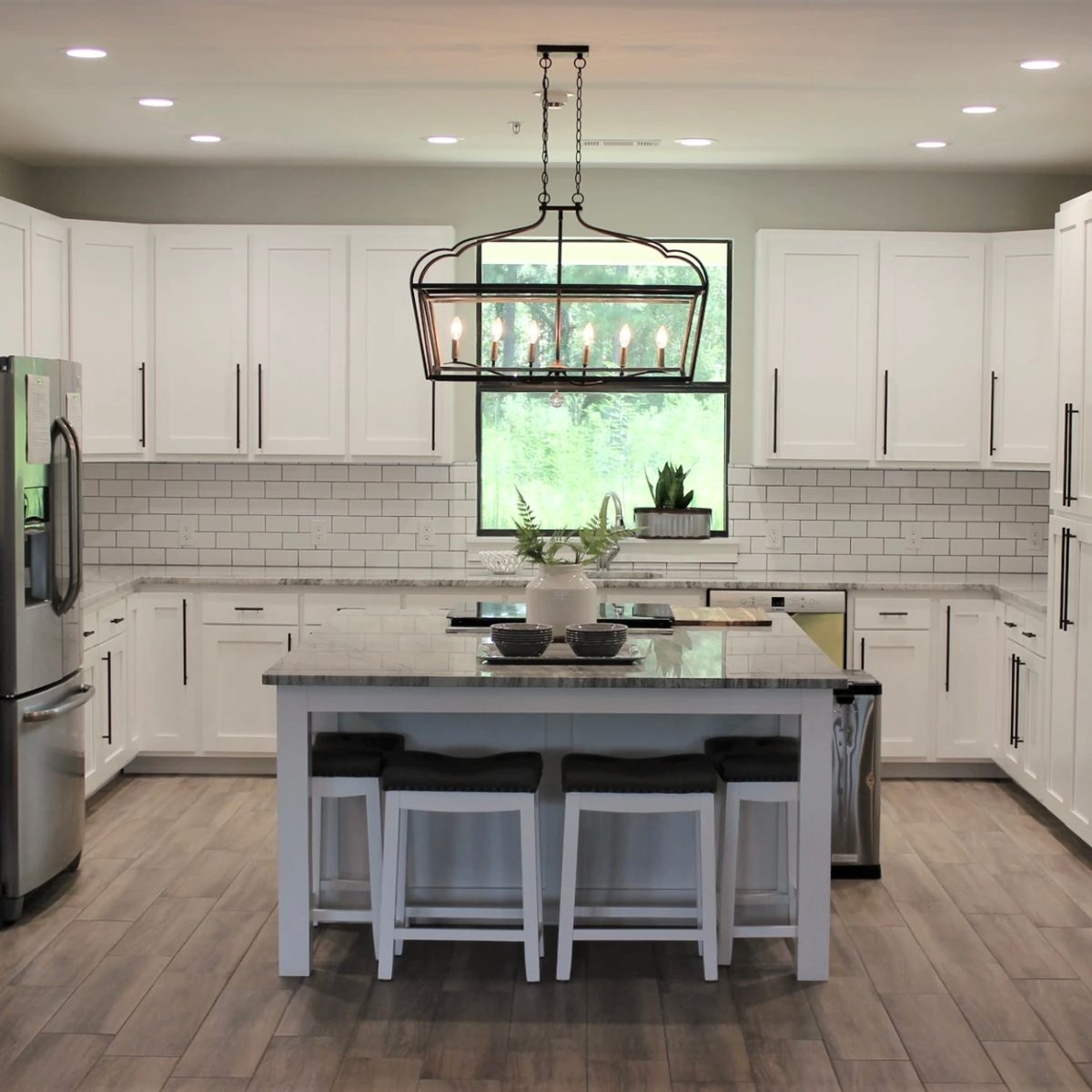
Occupational therapists sort daily tasks into two groups. The first group, basic activities of daily living (ADLs), covers the personal care tasks a person needs to get through the day. The second group, instrumental activities of daily living (IADLs), covers the more complex tasks that make it possible to live at home with less help.
| Basic self-care (ADLs) | Running a household (IADLs) |
|---|---|
| Dressing and undressing | Planning and cooking meals |
| Bathing and showering | Shopping and handling money |
| Grooming and oral care | Keeping up with medications and appointments |
| Eating and drinking | Housekeeping and laundry |
| Toileting | Using a phone, computer or calendar |
| Moving between bed, chair and bathroom | Arranging transportation and errands |
Most therapy starts with basic self-care, because safety and dignity come first. Household tasks usually follow as thinking skills, stamina and hand use improve. For someone planning to live alone again in Baton Rouge, those second-layer skills often decide whether that goal is realistic.
Occupational therapists usually rate each task by how much help it takes: done independently, done after someone sets it up, done with a helper watching, or done with hands-on assistance. Moving one step along that scale, even for a single task like dressing, is real progress. Families can ask to see these ratings, which make it easier to understand what the person can safely do at home and where support is still needed.
A weak or clumsy hand can make dozens of daily tasks harder at once. Occupational therapy works on the upper body in the context of the tasks it needs to perform.
Rebuilding the ability to lift and reach, while positioning and protecting a weak shoulder so it does not become painful.
Strengthening the hand for holding a cup, turning a key or gripping a toothbrush, with thicker handles while strength returns.
Practicing small, precise movements such as buttons, zippers, coins and typing.
Teaching ways to protect a hand with reduced feeling, such as checking water temperature with the stronger hand.
When full use of a hand does not return, therapy shifts toward one-handed methods, so tasks still get done even while recovery continues.
After a stroke or brain injury, the eyes may be healthy while the brain struggles to use what they see. A person might miss everything on one side of a page, misjudge the edge of a step or have trouble finding a shirt in a crowded drawer.
Occupational therapists commonly help with these problems through practical strategies: scanning deliberately toward the missed side, adding contrast and better lighting, reducing clutter and keeping items in the same place every time. An eye doctor should evaluate any change in vision itself.
Perception problems are often linked to cognitive changes such as attention and memory. Our cognitive rehabilitation approach explains how those skills are treated alongside OT.
Small tools can remove a surprising number of daily obstacles. Occupational therapists match equipment to the person's abilities and teach them to use it, so it becomes part of the routine instead of sitting in a closet.
Sock aids, long-handled shoehorns, button hooks and elastic laces.
Tub transfer benches, handheld showers, long-handled sponges and raised toilet seats.
Built-up utensils, plate guards, non-slip mats and rocker knives for one-handed cutting.
Reachers for dropped items, plus phone alarms, large calendars and pill organizers.
Not everyone needs every item, and some are only useful for a short time. Ask the occupational therapist before buying, since the right choice depends on the specific injury and the layout of your home.
Fatigue after a neurological injury is not ordinary tiredness. It can arrive suddenly and leave a person unable to finish tasks they handled well an hour earlier. Occupational therapists teach energy conservation, a set of habits that stretch limited stamina across the whole day.
These habits matter even more after discharge, when a busy household schedule replaces the structure of a residential rehabilitation program.
Occupational therapists look at a home in terms of routines, not just hazards. The goal is to make the right action the easy action, so less effort goes into remembering and more goes into doing.
Lay out clothes in the order they go on, keep a chair nearby for sitting to dress and place a lamp within reach of the bed.
Set up toiletries on the side of the stronger hand, keep the routine in the same order daily and use a written checklist if memory is affected.
Store everyday items between waist and shoulder height, and choose simple recipes with few steps to start.
Create one spot for keys, phone, calendar and mail, so important items are always in a predictable place.
Caregivers are invited into therapy sessions to practice these routines before discharge. For movement safety at home, such as walking practice and transfers, see physical therapy near Baton Rouge.
The word "occupation" in occupational therapy means any activity that gives a day purpose. That includes paid work, but also parenting, caring for a spouse, attending church, gardening, cooking for the family or taking college classes. Therapy goals are shaped around the roles each person wants back.
When a paycheck in the Baton Rouge area is part of the goal, therapy adds return-to-work activities, and NeuLife's vocational counselors help map out a job plan that fits current abilities. For others, therapy may focus on getting back to a hobby or recreational and social activities, which are an important part of emotional recovery.
Family roles count too. A parent may want to pack school lunches again, and a grandparent may want to hold a grandchild safely. Occupational therapists break goals like these into practical steps, such as sitting balance, one-handed techniques or a safer way to lift, and practice them until they feel natural.
After a residential stay, occupational therapy can continue as outpatient care in Hammond through our continuum of services, or at a practice closer to home once goals are simpler. Our team can help you weigh the drive against the benefit of staying with the same therapists.
Elizabeth Weisinger, OTR/L, leads the occupational therapy team in Hammond and has held her occupational therapy license for 37 years. Neurological rehabilitation is the center of her practice, with a focus on restoring function, independence and quality of life.
She takes a person-centered approach, keeps up with evidence-based techniques and pays attention to the physical, emotional and cognitive sides of recovery together. Occupational therapy works closely with our speech-language pathologists, whose work includes functional cognition, and with physical therapist Kelly Ruth, PT, DPT.
Read the full team biographies on our team page.
Our Residential Rehabilitation Program and Brain Injury Specialty Program have held CARF accreditation since 2020. See the accreditations page.
Executive Director Shae Monistere, RN, DON, oversees clinical care. Our mission and values describe the standards behind it.
Occupational therapy connects to every other part of recovery. These pages cover the rest.
Daily living skills, return to work and what an OT stay involves.
Where OT fits in care for capital region families.
Mobility aids, safe home practice and choosing a setting.
Discharge planning and life after a stroke.
The wider program behind every OT plan for brain injury.
No. Occupational therapy at NeuLife is provided only at our Hammond facility. Capital region patients either live on site during a residential program or make the trip east for outpatient visits.
They are the more complex tasks needed to live at home with less help, such as cooking, shopping, handling money, keeping track of medications and appointments, housekeeping and using a phone or computer.
Often, yes. OT works on reach, grip and fine motor control through task practice. If full use does not return, therapists teach one-handed methods and tools so daily tasks can still be done.
It depends on the injury and the home. Common examples include sock aids, reachers, tub transfer benches and built-up utensils. The occupational therapist will recommend what fits, so it is best to wait before buying.
Occupational therapists commonly teach strategies for problems such as missing one side of the visual field or misjudging distance. An eye doctor should evaluate changes in vision itself.
OT teaches energy conservation: planning demanding tasks for high-energy times, pacing with planned breaks, prioritizing and sitting for tasks where possible, so energy lasts through the day.
OT can practice the routine side, such as using a pill organizer, phone reminders or a checklist. Decisions about which medications to take remain with physicians and nursing staff.
Yes. Therapy can include return-to-work activities that practice job-related skills, and vocational counselors at NeuLife help set a practical timeline for going back to work or school.
NeuLife offers a continuum of services through outpatient care in Hammond. Some families later move to a practice near home, and our team can help decide which makes sense.
Yes. Caregivers are invited into sessions to practice routines, equipment use and cognitive strategies, so support at home matches what worked in therapy.
This information is educational and does not replace advice from a licensed occupational therapist, physician or other qualified provider who knows the individual. For any medical emergency, call 911.


We know that choosing the next step in your recovery from a Brain Injury or Spinal Cord Injury is complex. Together, we can help you take the next step.
Contact us with any questions today.